

Pinnacle Contractors
Decks & Outdoor Living
Pacific Northwest
8 minutes
If you are planning a new deck, one of the first choices you will run into is material. For most homeowners, that comes down to wood or composite.
That matters in Portland.
Between long rainy seasons, shaded yards, wet leaves, and damp air, decks here go through a lot. A material that performs well in a dry climate may need more attention in the Pacific Northwest. So the best choice is not just about what looks good when the deck is new. It is about what still feels like a good decision five or ten years from now.
At Pinnacle Contractors, we help Portland homeowners think through those details before construction begins. If you are deciding between wood and composite decking, here is what is worth knowing.
Why Your Deck Material Matters
Some homeowners love the look of real wood. They do not mind regular upkeep, especially if it means getting that natural grain and classic feel. Others would rather spend less time staining, sealing, and worrying about wet weather.
Neither choice is wrong. They are just different.
In Portland, the biggest question is often this: how much maintenance do you really want to take on?
That is why choosing the right deck material matters so much here. It affects the way your deck looks, how often it needs care, and how well it holds up over time.
A Quick Look at Wood vs. Composite
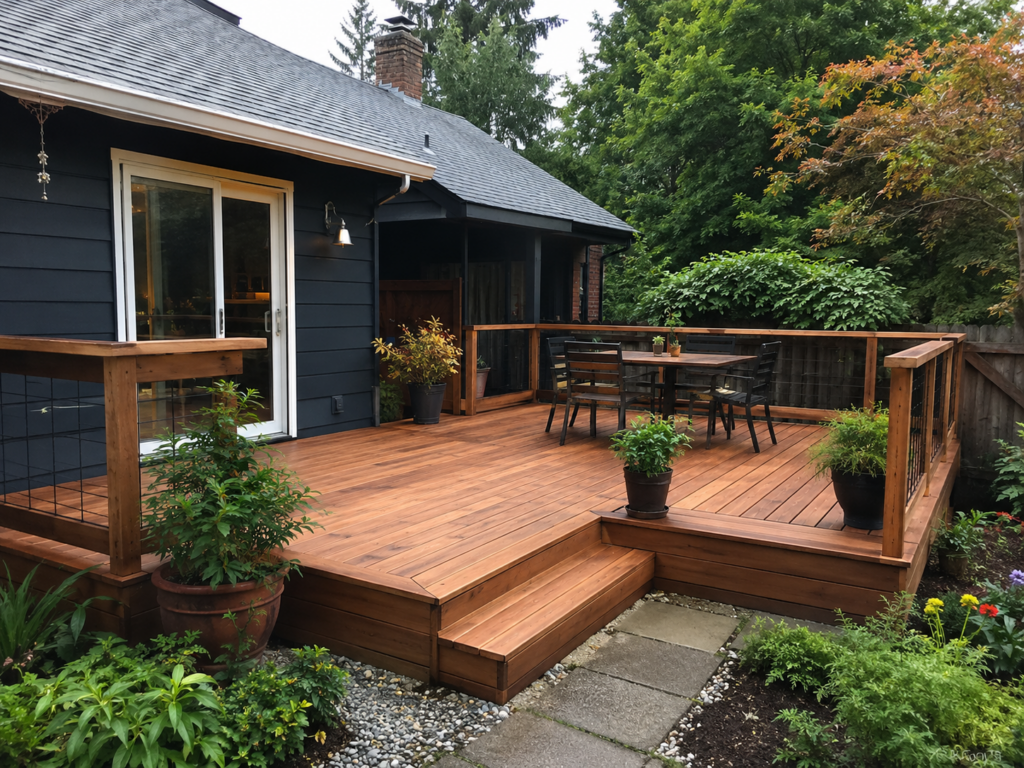
What to Know About Wood Decking
Common options include pressure-treated lumber, cedar, and redwood. Each one has its own look and price point. For many homeowners, the biggest reason to choose wood is appearance — real wood has variation from board to board, and on older Portland homes that can be a big part of the appeal.
Wood is also often less expensive at the start of the project. But it does come with a catch: it needs attention. Not constant attention, but regular attention.
- Warm, natural grain with real board-to-board variation
- Lower upfront cost, especially pressure-treated lumber
- Classic fit for older and craftsman-style homes
- Can be repaired one board at a time
- Needs cleaning, sealing or staining every few years
- Can fade, crack, splinter, warp, or rot if neglected
- Shaded areas dry slowly and are prone to trouble
- Long-term upkeep adds to the real cost of ownership
What to Know About Composite Decking
Older composite boards were not always convincing. That has changed quite a bit. Today's composite decking comes in better colors, more natural-looking grain patterns, and finishes that work well with many home styles.
It is popular with homeowners who want the deck to stay consistent over time. You still have to clean it, especially in a wet climate, but the maintenance is much lighter than what wood typically requires.
- No staining, sealing, or painting required
- Holds a consistent color and finish over time
- Handles damp, shaded conditions well
- Resists the issues that commonly affect lumber
- Higher cost to install — boards and fasteners cost more
- Some products need specific installation methods
- Quality varies; not all composite is created equal
- Color matching is harder if a board is replaced later

Maintenance Is Often the Deciding Factor
A wood deck needs more hands-on care. In Portland, it should be cleaned regularly and inspected for signs of moisture damage. It may also need staining or sealing more often than it would in a drier climate.
That does not mean wood is a bad choice. Plenty of homeowners are happy to maintain it. Some even enjoy the process because it lets them refresh the deck's appearance over time.
If you already know you are unlikely to keep up with sealing, staining, and seasonal cleaning, wood may become frustrating. A deck that looks beautiful in year one can start to feel like a burden if it needs work every spring.
Appearance: Natural Wood or a Consistent Finish?
Composite has a different kind of appeal. It is more controlled. The color is more predictable, and the overall finish can feel cleaner. If you want a deck that looks polished and uniform, a composite deck may fit your home better.
The right answer depends on your home and your taste. A classic craftsman may call for something different than a newer home with a more modern backyard design.
What About Cost?
But the initial price is only part of the story. Wood needs maintenance. Stain, sealer, cleaning supplies, repairs, and board replacement all add to the long-term cost. If you hire someone to do that work, the difference becomes even more noticeable.
Composite is usually more expensive when the deck is built. For some homeowners, that higher price is enough to make wood the better choice. For others, composite makes more sense over time — if you plan to stay in the home for years, the lower maintenance can help balance out the higher installation cost. It also makes the deck easier to own, which has value even if it does not show up neatly on a receipt.
How Portland Weather Affects Your Deck
Repairs and Lifespan
Wood can often be repaired one board at a time. If a section is damaged, it may be possible to replace only that area — helpful if the rest of the deck is still in good shape. The challenge is that wood may require more repairs as it gets older, because moisture, sun exposure, and neglected maintenance shorten its lifespan.
Composite generally holds its appearance longer with less visible wear. It resists many of the issues that commonly affect wood, though product quality matters. Color matching can also be harder years later if a board needs replacement, since product lines change and older colors may not always be available.
So, Which Deck Material Is Better?
Choose wood if…
Natural Character
You love real lumber and don’t mind the upkeep
Choose composite if…
Lower Upkeep
You want a deck that asks less of you over time
Choosing the Right Deck for Your Portland Home
Before choosing a material, think about your yard. Does the deck get full sun, or does it stay shaded most of the day? Do leaves collect in the area? Is the space exposed to rain, or is it partly covered? These details matter.
Also think about your own habits. Some homeowners are happy to clean and reseal a wood deck. Others know they would rather avoid that kind of upkeep.
A deck should make your home easier to enjoy. It should not become something you quietly resent every time it needs attention.
For many Portland homeowners, composite is the more practical long-term option because it handles wet conditions well and requires less maintenance. But wood still has a place. If you love the natural look and are willing to care for it, a wood deck can be beautiful. The best choice is the one that fits your home and feels realistic for the way you live.
Talk With Pinnacle Contractors
About Your Deck Project
If you are planning a new deck in Portland, we can help you compare wood and composite in a practical way. We’ll look at your yard conditions, talk through your budget, and help you choose a material that makes sense beyond installation day.
Frequently Asked Questions
Is composite better than wood for a deck in Portland?
Composite is often a strong choice in Portland because it handles wet conditions well and does not require as much maintenance as wood. Wood can still work, but it usually needs more care to stay in good shape.
Is wood decking cheaper than composite?
Wood usually costs less up front. Composite typically costs more to install, but it may save time and maintenance expenses later.
Does composite decking look like real wood?
Some composite products look very close to real wood, especially higher-quality options. Still, many homeowners can tell the difference. If the natural feel of lumber matters most to you, wood may be hard to beat.
Which deck material lasts longer?
Composite often lasts longer with less routine upkeep. Wood can also last for many years, but its lifespan depends heavily on cleaning, sealing, and protection from moisture.
What is the best deck material for a shaded Portland yard?
Composite is often a good fit for shaded yards because those areas tend to stay damp longer. Wood can work in shade, but it needs regular cleaning and careful maintenance to prevent moisture-related problems.
