

Aging in Place Remodeling In Portland:
Practical Upgrades for Safer, Long-Term Living
1 - THE BIGGER PICTURE
A Home That Continues to Work for You
Most people don’t think much about how their home works until something starts getting harder. It might be stepping over a tub wall, carrying laundry down the stairs, or walking across a slick entry during a rainy week. At first, it feels like a small inconvenience, something you work around without thinking too much about it.
Over time, those small things start stacking up. You move a little more slowly in certain spots and start paying closer attention to where you step, especially in places that never used to feel risky. That is usually when homeowners begin to think more seriously about how their home functions.
In Portland, this conversation tends to come up earlier than people expect. Many homes were built decades ago with tighter layouts, higher thresholds, and bathrooms that were never designed for long-term accessibility. Add in long wet seasons, moss buildup, and darker winter days, and certain parts of the home can become more difficult to navigate than they should be.
Aging in place remodeling is not about redesigning your home completely. It is about making practical changes so the house continues to work for you as you get older. When it is done well, these upgrades do not stand out or make the home feel clinical. They simply make everyday life easier and more predictable.
2 - COMMON PROBLEM AREAS
Where Most Homes Start to Fall Short
Entries and Exterior Access
This is one of the most common trouble spots. A lot of entries have uneven walkways, steps that do not have a natural place to grab for support, and surfaces that get slick as soon as the rain hits. In Portland, that is not occasional. It is most of the year.
Another issue that comes up is drainage. Water tends to collect near the entry, especially in older homes where grading has shifted over time. That creates slick surfaces and can also lead to long-term wear around the foundation and entry structure.
Bathrooms
Bathrooms are where a lot of aging in place work starts because they combine water, hard surfaces, and tight layouts. Even a newer bathroom can still be difficult to use safely if the layout is not working well.
What homeowners often miss is that it is not just about slipping. It is about how easy it is to move, turn, sit, and stand without feeling unstable. A bathroom that works when everything feels normal may not work the same way on a day when balance or strength is off.
Stairs and Level Changes
Stairs are one of those features that people rarely think about until they have to. They can be manageable for years, then something changes and they quickly become the biggest obstacle in the house. That shift often happens after an injury or surgery, when strength or balance is not quite what it used to be.
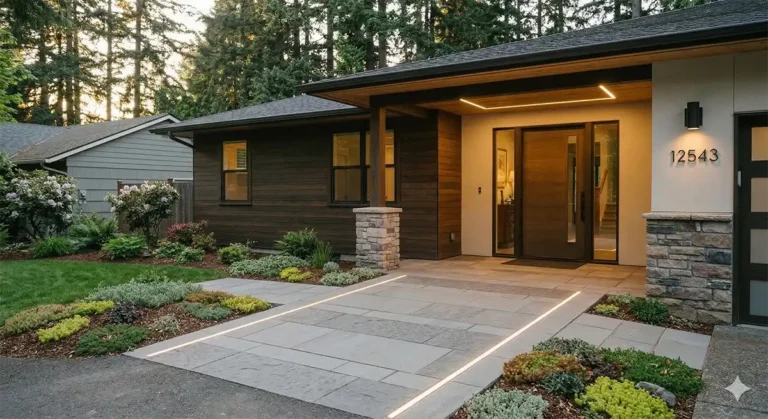
A thoughtfully designed entry with level surfaces, integrated lighting, and slip-resistant materials — accessibility built into the architecture, not bolted on after the fact.
3 - BATHROOMS
Bathroom Remodeling That Actually Improves Daily Use
Most homeowners start with the bathroom because it is where the risk is highest and the improvements are easiest to feel right away. It is also one of the most frequently used spaces in the home, which means even small improvements can have a noticeable impact.
Walk-In Showers vs. Tubs
Stepping over a tub wall is one of the first things that becomes difficult. It is not just about strength. It is balance, flexibility, and how steady you feel that day. A walk-in or curbless shower removes that step entirely and immediately reduces that risk.
The slope has to be right so water drains properly without pooling. The tile needs enough traction to prevent slipping but still be comfortable underfoot. Seating should be placed where it actually helps, and grab bars need to align with how someone naturally moves through the space.
In Portland, waterproofing and ventilation are just as important as accessibility. A poorly built shower may work fine at first, but moisture can build up behind the walls or under the floor. That is the kind of problem that usually does not show up until later, when it is more difficult and expensive to fix.
Layout and Clearance
Some bathrooms have newer finishes but still do not function well. The issue is not the fixtures themselves. It is the spacing and how the room is laid out. If there is not enough room to move comfortably around the toilet or vanity, the space becomes harder to use over time. Sometimes shifting a vanity a few inches or opening up the layout makes the entire room feel more usable. In older Portland homes, those adjustments often require careful planning because plumbing locations and framing can limit what is possible.
4 - ENTRIES
Safer Entries That Work in Portland Weather
Entry upgrades are not always prioritized, but they should be. You use your entry every day, and in Portland you often use it in wet conditions, which makes stability much more important than people expect. A good entry should feel stable and predictable year-round. That usually means slip-resistant surfaces, proper drainage so water does not collect near the door, and railings placed where people naturally reach for support. These details may seem minor, but they make a noticeable difference over time.
Lighting is another detail that often gets overlooked. It needs to cover the entire walking path, not just the doorway. In low light conditions, shadows can make even a familiar entry feel harder to navigate.
In some homes, the entry gets lowered or reworked to reduce step height. That can involve grading changes, rebuilding landings, or adjusting framing. It is not always a simple change, but it can significantly improve how the home functions long term.
155
77%
#1
60%
5 - MAIN-LEVEL LIVING
Main-Level Living and Why It Matters
If there is one upgrade that extends how long someone can comfortably stay in their home, it is having a bedroom and full bathroom on the main level. This becomes especially important in homes where all bedrooms are located upstairs.
Creating a main-level living setup does not always require adding square footage. In many cases, it involves using existing space more effectively. An office or den can often be converted into a bedroom, and a half bath can sometimes be expanded into a full bathroom.
This kind of change provides flexibility. It allows homeowners to continue using their home comfortably even if mobility changes, and it reduces the likelihood of needing to make a rushed move later on.
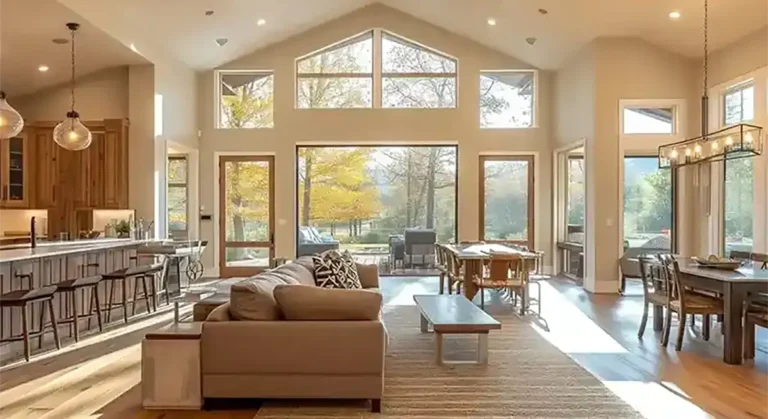
Open main-level layouts with connected living, dining, and kitchen spaces allow homeowners to live comfortably on one floor — reducing dependence on stairs as needs change.
6 - KITCHEN
Kitchen Changes That Reduce Daily Strain
The kitchen does not always come up first in aging in place conversations, but it should. It is a space where you are constantly reaching, bending, lifting, and moving around. If the layout is not working well, it can become frustrating quickly.
Common issues include deep lower cabinets, poor lighting over work areas, and tight walkways that make movement awkward. These are not always obvious problems until daily use starts to feel more difficult. You don’t always need a full remodel. Pull-out shelves can make lower cabinets easier to access. Better lighting can improve visibility.
Small layout adjustments can make the space feel more open. These changes may not stand out visually, but they have a meaningful impact on how the kitchen functions.
7 - THE SMALL THINGS
Flooring, Lighting, and Small Details That Matter
Some of the most effective improvements are also the least noticeable, but they play a big role in how safe and comfortable a home feels.
Flooring
Transitions between rooms are something homeowners often overlook. A small height difference or a loose material can become a trip hazard over time, especially in areas that are used frequently. Smoothing those transitions and choosing materials with better traction helps create a more stable walking surface throughout the home. These changes tend to blend in visually, but they make movement feel more secure.
Lighting
Lighting becomes more important as vision changes, especially during Portland’s darker months. A home that feels fine during the day can feel very different in the evening. Hallways, stairwells, bathrooms, and entries all benefit from better lighting that reduces shadows and improves visibility. This is one of the simplest ways to improve safety without changing the structure of the home.
Hardware and Controls
Small upgrades can make everyday use easier. Lever-style door handles, rocker switches, and easy-to-grip fixtures reduce strain and improve usability. These are not dramatic changes, but they add up in a meaningful way over time.
8 - THE RIGHT APPROACH
Repair vs. Remodel: Knowing Which Makes Sense
Not every issue requires a full remodel. In some cases, a repair or small upgrade is enough to solve the problem. Adding a well-placed handrail, improving lighting, or adjusting flooring can address specific concerns without major work.
However, there are situations where a larger change makes more sense. If the layout itself is limiting how the space functions, surface-level fixes will only go so far. A tight bathroom, an awkward entry, or a poorly designed kitchen often requires a more thoughtful remodel.
The key is understanding whether the problem is surface-level or built into the home’s structure. That distinction helps determine whether a repair will hold up or whether a more complete solution is needed.
9 - WHAT TO EXPECT
What the Remodeling Process Usually Looks Like
One question that comes up often is what the process actually involves. Most projects start with a walkthrough to understand how the home is being used and where the challenges are. From there, the planning phase focuses on layout decisions, materials, and what is realistically possible within the existing structure. This is where a lot of important decisions get made.
Once construction begins, timelines depend on the scope of the project. A bathroom remodel may take a few weeks, while larger layout changes or multi-room projects take longer. What matters most is that the work is done in the right order and built to last. Rushing through key steps, especially waterproofing or structural changes, tends to create problems later.
Walkthrough
Assessing home usage to pinpoint specific challenges.
Planning & Design
Reviewing layout, materials, and structural constraints.
Construction
Project duration depends on the specific room and scope.
10 - INVESTMENT
Cost Factors for Aging in Place Remodeling in Portland
Costs vary depending on the home and the scope of work involved. Here are the primary variables that shape a project budget.
Bathroom Remodels
Entry Upgrades
Main-Level Conversions
Kitchen Modifications
The important thing is not just the upfront cost. It is whether the solution will hold up over time and actually solve the problem.
11 - COMMON PITFALLS
Common Mistakes to Avoid
One of the most common mistakes is waiting too long. It is much easier to plan these upgrades in advance than to rush into them after an injury or major change.
Another mistake is focusing on just one feature. A safer shower helps, but it matters more when the path to it is also safe and easy to navigate. Think about the full journey through the space.
Short-term fixes are another issue. They can help temporarily, but they usually do not provide the same level of comfort or durability as a well-planned remodel.
Aging-in-place remodeling is about ensuring your home continues to support you over time. The best upgrades do not draw attention to themselves. They simply make daily life easier, safer, and more comfortable. If you are starting to notice small issues with how your home functions, it is usually worth taking a closer look now rather than waiting until those issues become bigger problems.
At Pinnacle Contractors, we work with Portland-area homeowners to make practical, well-built improvements that fit the way people actually live and hold up over time.
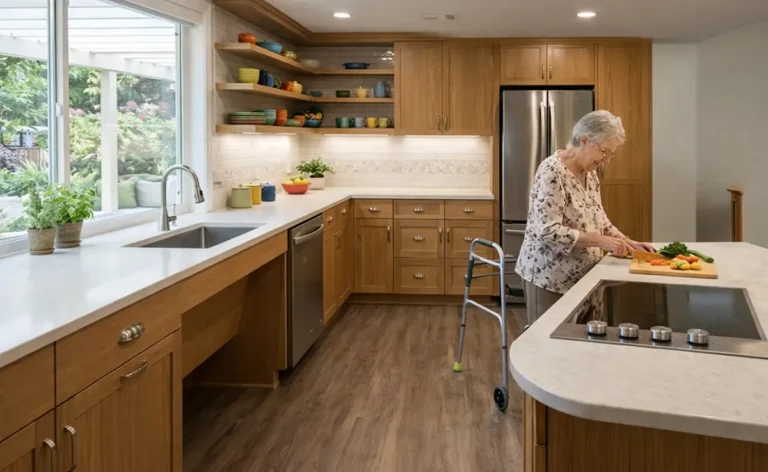
An accessible kitchen that does not sacrifice warmth or style — wide clearances, open lower shelving, pull-out storage, and lowered prep surfaces designed for real daily use.
12 - FAQs
Frequently Asked Questions
What is aging in place remodeling?
It is the process of making practical modifications to your home so it continues to work safely and comfortably as you get older. Common projects include bathroom upgrades, entry improvements, main-level living conversions, and kitchen modifications.
When should I start thinking about aging in place modifications?
Earlier than most people expect. It is much easier to plan and build these improvements proactively than to rush into them after an injury or major life change. If you are starting to notice small issues with how your home functions, it is usually worth taking a closer look now.
What is the most common aging in place project?
Bathroom remodeling is the most common starting point. Walk-in or curbless showers, improved layouts, better grab bar placement, and increased clearance around fixtures are among the most frequent upgrades.
Do these upgrades make a home look different?
Not when done well. Most changes blend into the home and feel natural. The best aging in place work blends into the home’s existing design. It should feel like a natural improvement, not a clinical addition. Quality materials and thoughtful design make a significant difference.
How much does aging in place remodeling cost?
Costs vary depending on the scope. Bathroom remodels, entry upgrades, and kitchen modifications each have different cost profiles. The most important consideration is not just upfront cost but whether the solution will hold up and actually solve the problem over time.
Do I need a contractor for this type of work?
For layout, plumbing, or structural changes, working with a qualified contractor is important.